Chess, as it was played in the year 900
The counsellor creeps one square, the elephant leaps, nobody castles, and a shah left alone has lost.
Tap or drag one of your men. Arrow keys look back through the game.
Six men, carved as plain shapes
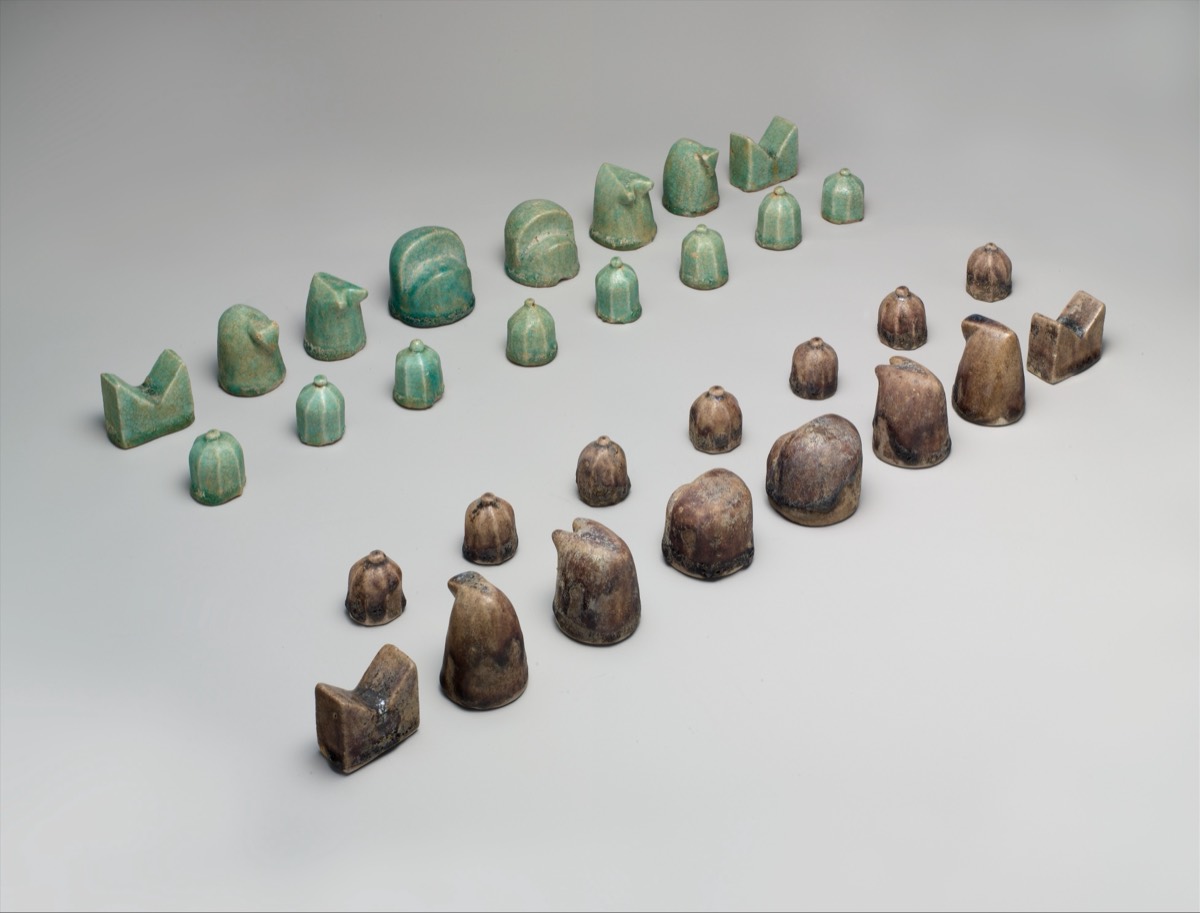
What differs from today's chess
- No queen and no bishop. In their places stand the counsellor, who moves one square on the slant, and the elephant, who leaps exactly two squares on the slant and may jump a man in between.
- Foot soldiers take one step, always. There is no double step at the start and so no taking in passing. On the far row a foot soldier becomes a counsellor; there is no choice.
- No castling. It was invented centuries later.
- Stalemate wins. The side that cannot move has lost.
- A bare shah loses. Take every man but the shah and you have won, unless the lone shah can at once take your own last man. Then it is a draw. At Medina even that counted as a win.
- The board is plain. Squares were ruled, not chequered.
What this board adds
- A clock. Run out of time and you lose, unless your opponent has only the shah left; then it is a draw.
- Two modern draws. The same position three times, or seventy moves by each side with no capture and no foot soldier moved.
- A fixed start. The sources leave open which side of the counsellor the shah stood on and who moved first. Here both shahs stand on the d-file and turquoise begins.
From chatrang to shatranj
The game reached Persia from India as chatrang, from the Sanskrit caturaṅga, and was played in the Sasanian Empire; a Middle Persian book on it dates to about 620. Arabic speakers called it shatranj.
In the ninth and tenth centuries the caliphs' courts ranked their players. Al-Adli was the one grandee, aliyat, under caliph al-Wathiq until al-Razi beat him in 847. As-Suli was the strongest under al-Muktafi.
Openings and problems
Because the men are slow, masters studied set opening arrays, tabiyat, and composed endgame problems, mansubat, usually won by a run of checks.
The best known is told of Dilaram. A nobleman who had lost everything staked her on one last game, and she called out, as the story goes, “Sacrifice your two rukhs, but not me.” The mate in five on this page is built after hers: both rukhs are given up on h8 and the elephant uncovers the check. The other side's men are this page's own arrangement, not the manuscript's.